
The Epstein Narrative
Spycraft and Storytelling #4

Salutations from the shadows,
This month we’ve been talking about narrative, and how the story around an event often becomes more powerful than the event itself.
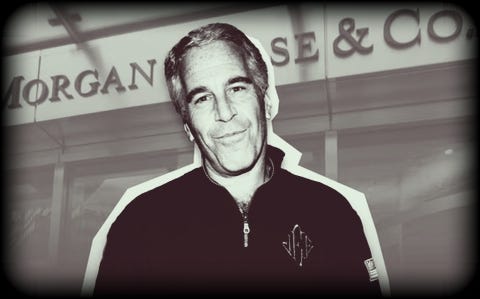
Next month we’re going to talk about Jeffrey Epstein. And I can’t think of a cleaner example of what happens when you lose control of the narrative, so we are going to use it as a segway between the two.
For years, Epstein’s world ran on story management. He wasn’t just a predator, he was a curator. He curated proximity. He curated access. He curated status. He curated the idea that being seen with him meant you were important, connected, protected. That’s how a network like that survives. Not on secrecy alone, but on social story. The unspoken agreement that nobody asks questions because the questions would cost them.
Now that story is collapsing, and you can watch people scramble in real time.
Officials go in front of cameras and insist there’s “nothing there.” No broader network. No meaningful co-conspirators. Nothing to see. Meanwhile, documents, emails, contacts, travel records, and correspondence keep surfacing, and the gap between the official line and the paper trail gets wider by the day.
That gap is where narrative dies.
Because people will tolerate uncertainty. They’ll tolerate complexity. They’ll tolerate ugly facts. What they don’t tolerate for long is being treated like they’re stupid. They don’t tolerate obvious talking points that collide with receipts. They don’t tolerate evasions that feel like protection.
So the story shifts. Not because someone “won” an argument, but because the frame breaks.
And when the frame breaks, the guilty move fast.
They deny knowing him, then a photo shows up.
They deny being around him, then an email shows up.
They deny involvement, then a calendar entry shows up.
They deny a relationship, then a contact list shows up.
This is what it looks like when a narrative can’t be sustained. The denials start stacking up, and each denial becomes a liability. At that point, you’re not defending yourself from the original allegation anymore. You’re defending yourself from your own statements.
That’s the trap.
And it’s why “narrative control” isn’t just PR. It’s operational.
The smart move is never to build your life on a story that can’t survive records.
Because the modern world is records. Email. Text. DMs. Calendars. Photos. Flight logs. Cloud backups. Archived threads. There is no such thing as “it’s just my word against theirs” the way there used to be. If you lived it, there’s a trail. If you wrote it, it exists. If you joked about it, it’s screenshot somewhere.
So here’s the lesson for everyday people, the kind who aren’t trying to run a blackmail empire, they’re just trying to live clean and think clearly.
Don’t let other people’s framing do your thinking for you.
When an official says, “Nothing to see,” ask what they mean by that and what it would look like if it were false.
When someone says, “No one else was involved,” ask whether that’s a legal claim, a moral claim, or a carefully worded technical claim.
When someone says, “This is misinformation,” ask what specific fact is wrong and what evidence they’re relying on.
That’s intelligence analysis. Not outrage. Not tribal loyalty. Not emotional reflex. Just refusing to accept a prepackaged story.
The Art of Spycraft Practical Exercise:
Pick one public controversy you’re following right now.
Write down the dominant frame you’re being offered in one sentence. Then write a competing frame in one sentence. Then list five facts you can verify that don’t require either frame to be true.
You’re training the skill of separating story from reality.
Because once you can do that, you’re harder to manipulate, harder to steer, and harder to recruit into someone else’s narrative.
And that is the Art of Spycraft.
- P.J.